Meet the Kora Players Reviving Mandinka Tradition
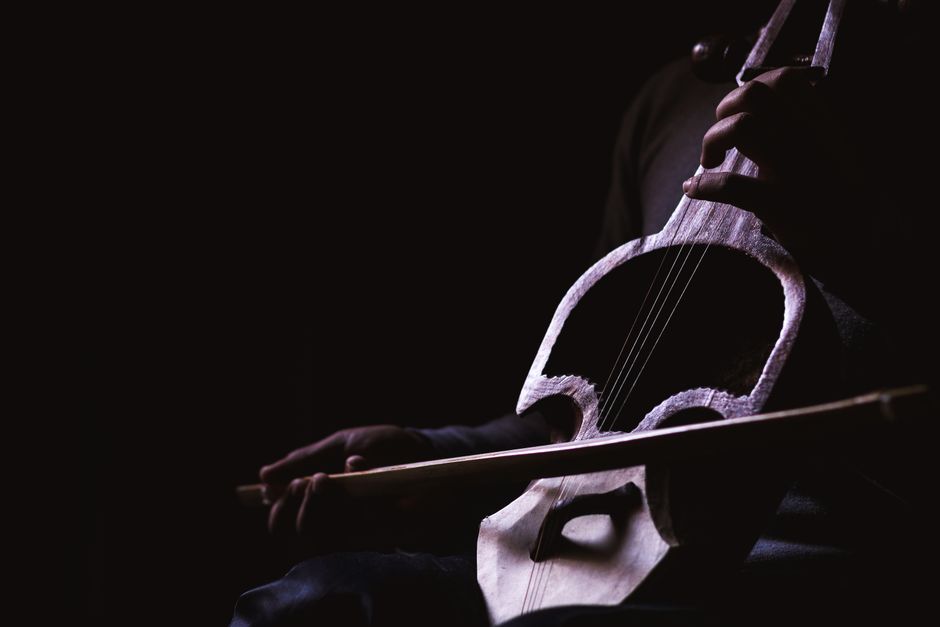
The kora, a 21-stringed harp-lute central to Mandinka musical heritage, has long served as a vessel for history, praise, and social commentary across West Africa. In recent decades, a growing number of contemporary musicians have taken up the instrument and placed it in dialogue with jazz, electronic music, and other global genres. These artists do not simply preserve a fixed repertoire; they engage with ancestral material through composition, improvisation, and sound design, often while maintaining active international touring schedules. The resulting landscape is one of continuous negotiation between tradition and experimentation.
Understanding this movement requires attention to the methods these musicians employ—how they learn Mandinka repertoire, how they integrate non-traditional textures, and how they frame their work for diverse audiences. It also involves recognizing the cultural and logistical contexts in which they operate, from family lineages of griot practice to festival circuits and digital distribution platforms. This article profiles several representative approaches rather than offering a definitive survey, since the field is diverse and constantly evolving.
What follows is an informational overview of the practices, challenges, and creative strategies associated with contemporary kora players who blend ancestral Mandinka repertoire with jazz and electronic textures. The focus is on process and context, with the understanding that outcomes depend on many external factors and that no single path defines the tradition.
The Kora and Mandinka Repertoire: Foundations and Fluidity
The kora’s traditional role is closely tied to the jali (or griot) caste, where musicians serve as oral historians, genealogists, and ceremonial performers. The instrument’s tuning and playing technique allow for intricate melodic lines and rhythmic patterns that support narrative songs, many of which date back centuries. Contemporary players often begin their training within this lineage, learning from family members or community elders through oral transmission and apprenticeship. This foundation provides a deep familiarity with repertoire such as “Kaira,” “Sunjata,” and “Lambango,” which continue to serve as touchstones even for artists who later explore new directions.
However, tradition is not static. Even within Mandinka practice, regional styles, personal interpretations, and performance contexts have always shaped how repertoire is presented. Contemporary musicians extend this fluidity by reharmonizing melodies, altering rhythmic cycles, or adapting lyrics to address modern themes. Such approaches are typically presented as extensions of tradition rather than departures from it, though perspectives vary among practitioners and audiences. The key methodological point is that these artists usually maintain a recognizable connection to Mandinka aesthetics—whether through ornamentation, vocal delivery, or the use of the kora’s characteristic timbre—even as they introduce new elements.
For listeners and researchers, this raises questions about authenticity and innovation. Rather than resolving those questions, it is more useful to observe how musicians articulate their own intentions. Some emphasize continuity with ancestral practice; others highlight experimentation as a natural part of any living tradition. Both positions can be found within the same touring circuit, and neither is inherently more valid than the other. What matters for this overview is the shared commitment to the kora as a primary voice, not merely a decorative accessory.
Blending with Jazz: Improvisation, Harmony, and Rhythm
Jazz has provided a particularly fertile ground for kora players seeking to expand their harmonic and improvisational vocabulary. The kora’s diatonic tuning (often in F major or similar) can accommodate jazz harmonies with adjustments, and its two-handed technique lends itself to contrapuntal lines that interact with bass, drums, or piano. Musicians who pursue this direction often study jazz theory independently or through collaborations with jazz instrumentalists, learning to navigate chord changes and extended forms while retaining the kora’s idiomatic patterns.
In practice, blending jazz and Mandinka repertoire involves several methodological choices. One common approach is to use Mandinka songs as vehicles for improvisation, preserving the original melody and lyric while allowing solo sections to explore harmonic substitutions and rhythmic displacement. Another approach involves composing new works that draw on both traditions, sometimes using odd meters or modal frameworks that reflect West African rhythmic concepts as much as jazz conventions. A third approach focuses on arrangement, where the kora is placed within a jazz ensemble and its lines are echoed or contrasted by horns, guitar, or vibraphone.
These methods are not mutually exclusive, and many artists combine them. The results can vary widely, and audience reception depends on factors such as venue context, programming, and the clarity of the artistic proposition. For the musicians themselves, the process often involves extensive listening and transcription, as well as trial-and-error in rehearsal. It is important to note that jazz is not a monolith; the specific subgenres and stylistic references matter greatly, and the most convincing integrations tend to arise from genuine dialogue rather than surface-level juxtaposition.
Electronic Textures: Amplification, Processing, and Production
Electronic music offers another set of possibilities, ranging from subtle amplification and reverb to live looping, sampling, and synthesis. Some kora players incorporate electronics to expand the instrument’s sonic footprint, allowing it to fill larger venues or to interact with digital textures. Others use processing as a compositional tool, treating the kora’s sound as raw material for layering, filtering, or spatialization. These approaches require technical knowledge—signal routing, effects parameters, and software environments—that may be acquired through formal study, peer learning, or experimentation.
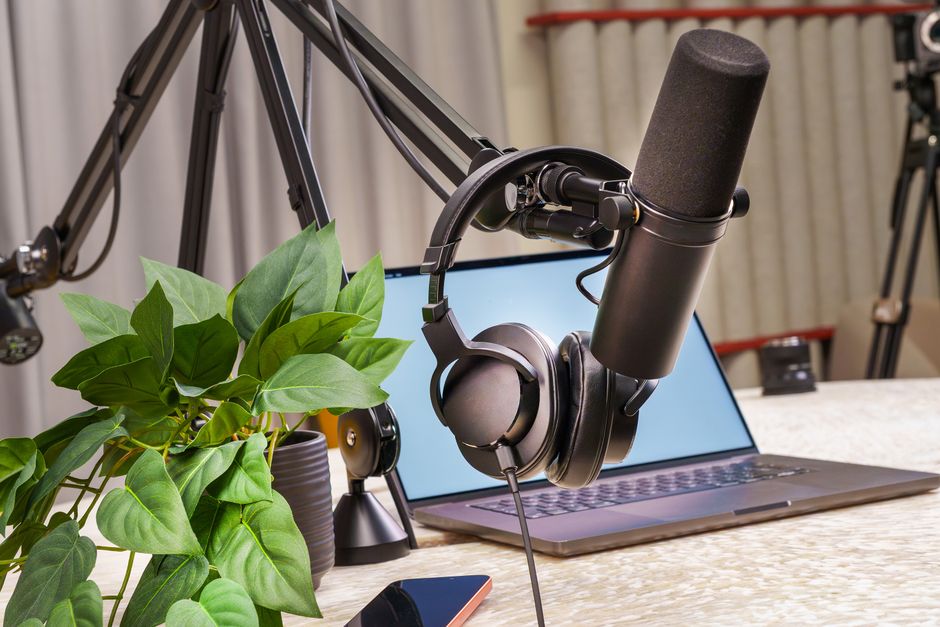
A typical electronic setup for a kora player might include a pickup or microphone, a preamplifier, a laptop or hardware sampler, and a suite of effects. The musician must balance the acoustic integrity of the kora with the desired electronic treatment, often making decisions about which elements to leave unprocessed and which to transform. In live performance, this can introduce variables such as feedback, latency, and stage monitoring that demand careful soundcheck procedures. On recordings, production choices—such as whether to layer multiple kora tracks or to process a single take—shape the final texture and the listener’s perception of the instrument.
As with jazz fusion, electronic experimentation varies in depth and intent. Some artists use electronics primarily for reinforcement, while others create immersive soundscapes where the kora is one element among many. The methodological thread is a willingness to treat technology as an extension of the instrument’s voice, subject to the same considerations of phrasing, dynamics, and cultural meaning. It is worth noting that electronic approaches can raise questions about fidelity to acoustic tradition, and musicians often address these questions in interviews and liner notes, explaining their choices and acknowledging the range of opinions within the community.
Touring Internationally: Logistics, Audiences, and Representation
International touring is a defining feature of many contemporary kora careers, providing exposure to diverse audiences and opportunities for cross-cultural collaboration. However, touring also involves significant logistical and financial challenges, including visa procedures, instrument transport, and the need to adapt to different performance contexts. The kora’s size and fragility can complicate air travel, and musicians often invest in custom cases or travel with a smaller instrument when feasible. These practical considerations influence repertoire choices and ensemble configurations.
Audience expectations vary by region and venue type. In some settings, listeners may be familiar with Mandinka music through world music circuits or academic study; in others, the kora may be entirely new. Musicians often develop flexible setlists that can accommodate different levels of familiarity, sometimes including spoken introductions or program notes to provide context. Festival appearances may favor shorter, high-impact sets, while club or concert hall performances allow for more extended explorations. The ability to read an audience and adjust accordingly is a skill developed over time.
Representation is another dimension of international touring. Musicians may be asked to speak about Mandinka culture, and they navigate questions about authenticity, appropriation, and the politics of genre labeling. Some artists use their platform to educate audiences about the jali tradition and its historical significance; others prefer to let the music speak for itself. There is no single correct approach, and individual choices reflect personal priorities and the specific dynamics of each engagement. For those interested in following these developments, platforms such as Kora Radio can serve as a resource for discovering recordings and interviews, though the responsibility for interpretation remains with the listener.
Profiles in Practice: Converging Approaches
While each artist’s path is distinct, several profiles illustrate how these elements can converge. One common profile is the tradition-bearer who expands into jazz: a musician raised in a jali family, deeply versed in Mandinka repertoire, who later studies jazz harmony and forms a quartet with saxophone and drums. This artist might perform traditional songs with extended improvisational sections, maintaining the original lyrics while allowing the kora to engage in call-and-response with the horn. The methodological emphasis is on continuity, with jazz serving as a lens rather than a replacement.
Another profile is the producer-composer who integrates electronics: a player who works extensively in the studio, using the kora as a source for sampling and synthesis while also performing solo acoustic sets. This artist might release albums that alternate between ambient electronic pieces and unadorned Mandinka songs, with detailed production notes explaining the techniques used. The intention is often to create a dialogue between past and present, and the artist may speak about the kora’s timbre as a carrier of memory that can be reframed through technology.
A third profile is the collaborator who moves across genres: a musician who works with jazz ensembles, electronic producers, and traditional Mandinka groups, often commissioning new works that explicitly address the intersections. This approach requires strong communication skills and a willingness to adapt, as well as a clear understanding of what each context demands. Such artists may document their processes through workshops or online tutorials, contributing to a broader knowledge base. Across these profiles, common threads include rigorous practice, respect for ancestral repertoire, and a pragmatic approach to the opportunities and constraints of international touring.
The revival of interest in the kora and Mandinka tradition is thus not a single movement but a complex field of activity. By examining methods and contexts, listeners and researchers can better appreciate the artistry involved and the conditional nature of any outcomes. The musicians themselves continue to negotiate the balance between preservation and innovation, and their work invites ongoing attention and dialogue.